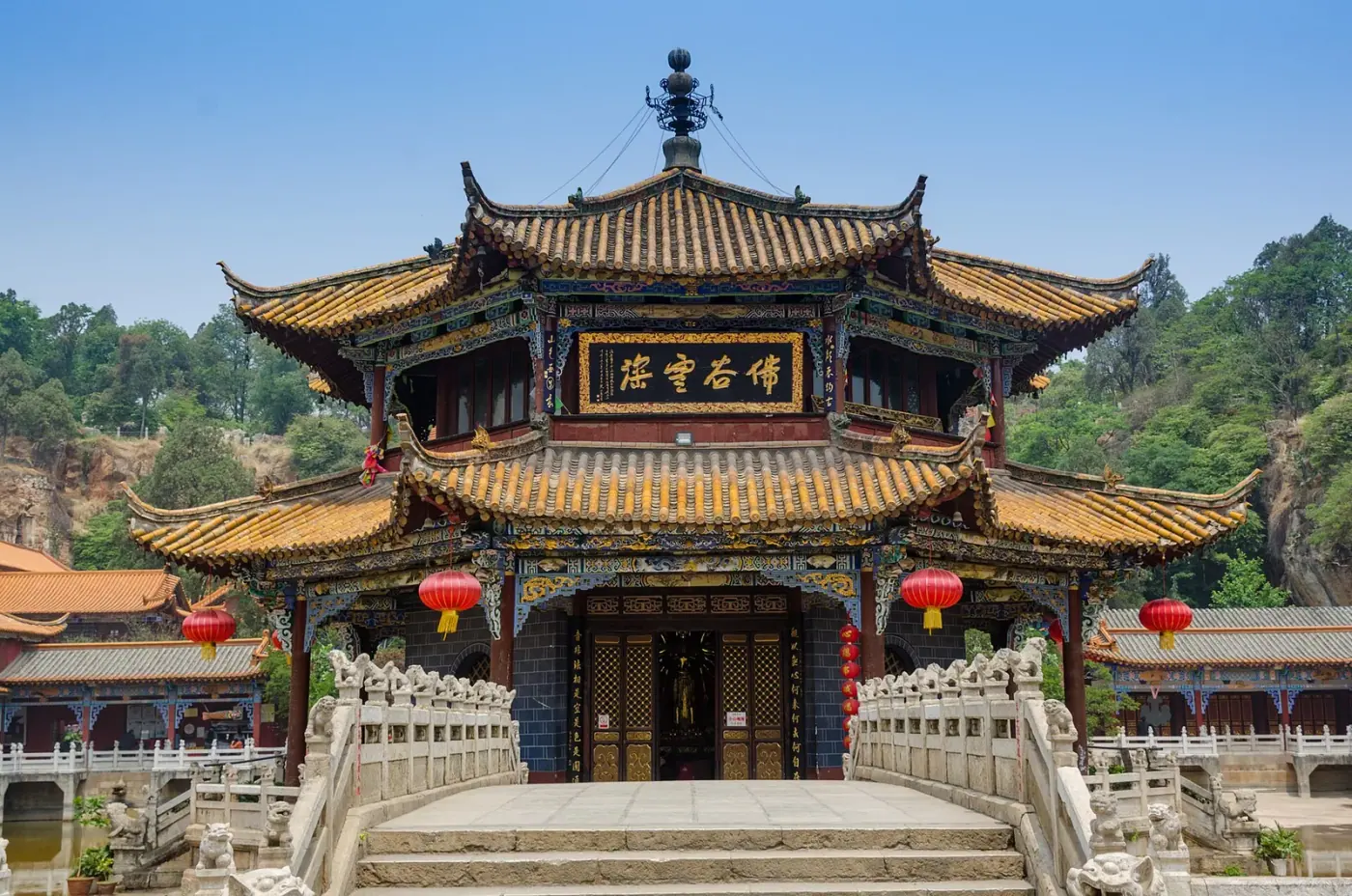
Yuantong Temple sits below street level, which is part of its charm: you come down a flight of steps from the road and the traffic noise falls away. The complex dates back more than a thousand years, though the buildings you see are mostly later reconstructions. It is an active temple, not a museum, and that changes the atmosphere.
What to see
The central pond is the first thing you notice, with a stone bridge and pavilions. Around it are the main halls, including a large Buddha hall and a smaller hall behind it. The architecture is a mix of Chinese Buddhist styles, with some Theravada and Tibetan touches that reflect Yunnan’s position between those traditions.
Look for the resident turtles in the pond and the incense smoke in the courtyards. The temple is busiest on the first and fifteenth days of the lunar month, when local people come to pray. Those are the most interesting days to visit, and the worst days if you want quiet.
How to behave
This is a place of worship. Speak quietly, do not point your camera at people praying, and do not photograph inside the halls if there are signs asking you not to. Dress modestly — shoulders and knees covered is the safe standard.
You can buy incense at the entrance, but you do not need to. A small donation is appropriate if you use the temple, not a requirement.
Combining it with Green Lake
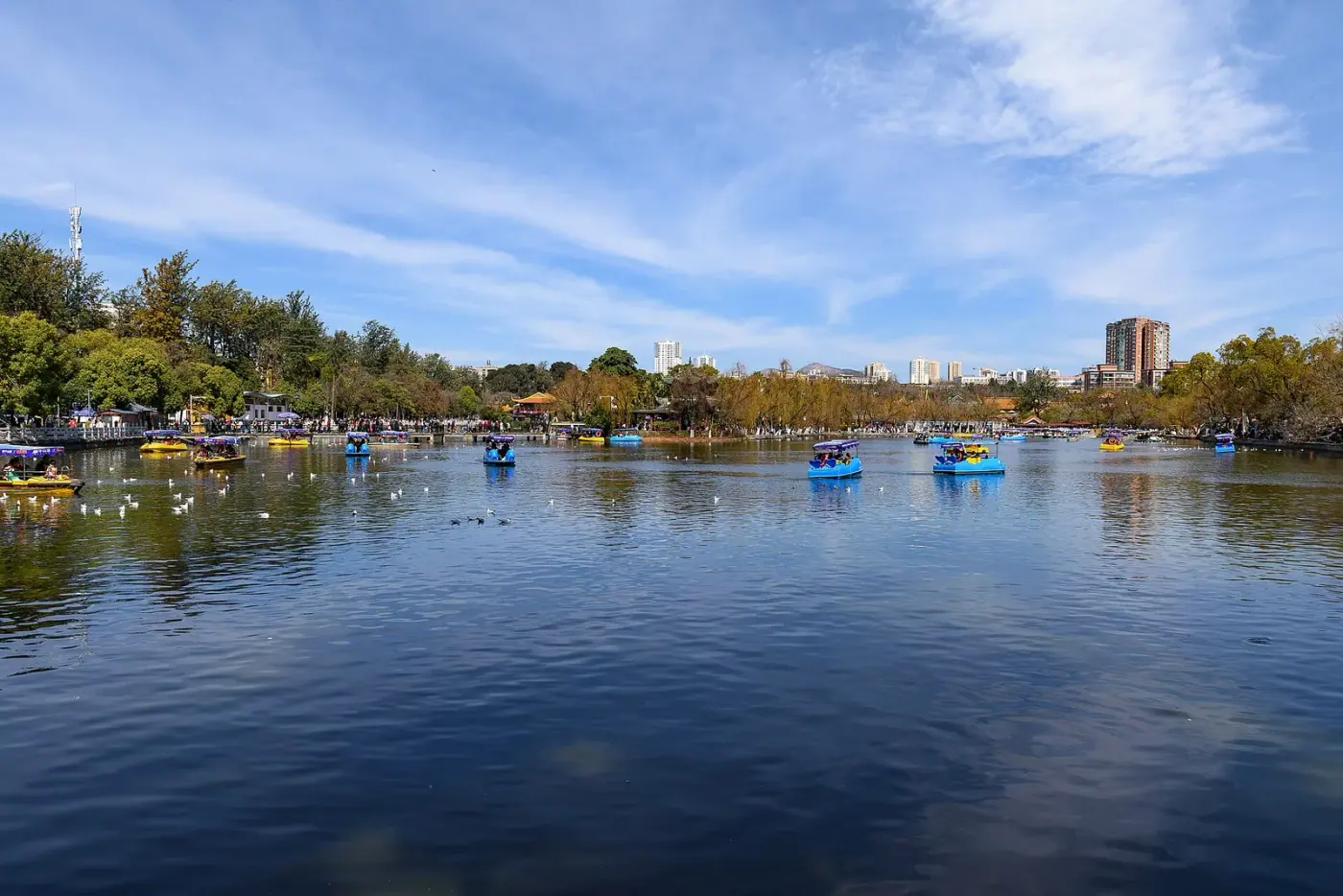
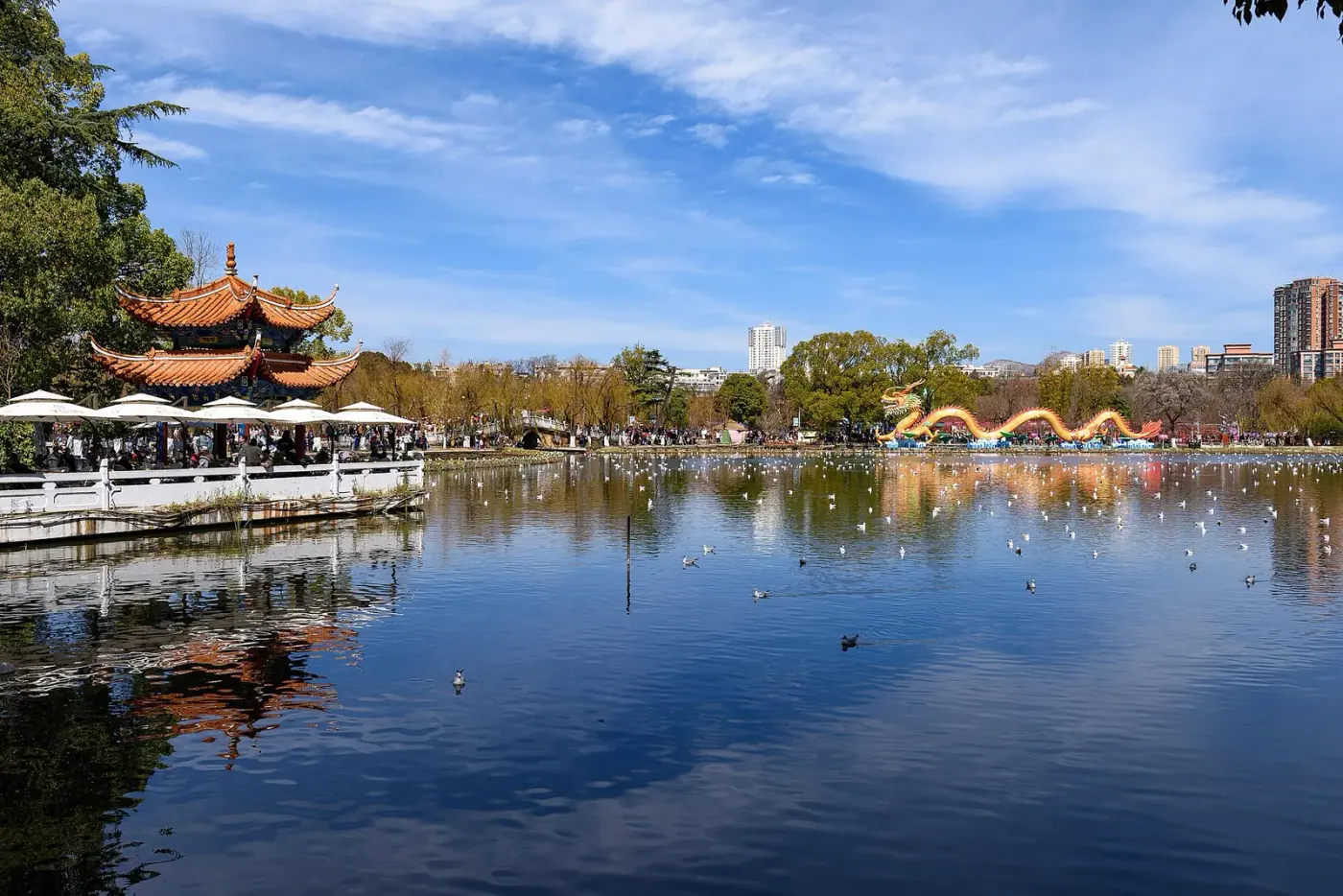
Yuantong is a ten-minute walk from Green Lake, which makes a natural half-day: park first, temple second, lunch in the Wenlin Street area afterwards. In the morning the order works better the other way around — temple at eight, lake at nine, breakfast at ten.
Practical
The entrance fee is small and has changed over the years; bring cash as a backup even though mobile payment is accepted. The temple closes in the late afternoon, so do not leave it until the end of the day. There are toilets on site, and a vegetarian restaurant nearby if you want a quiet meal.