Green Lake sits in the middle of the old city, ringed by roads, universities and low apartment blocks. You do not come here for wilderness. You come for the particular pleasure of a Chinese urban park doing exactly what it was designed to do: giving several thousand people somewhere to walk, sing, fish, dance and drink tea without getting in each other’s way.
Why it earns a morning
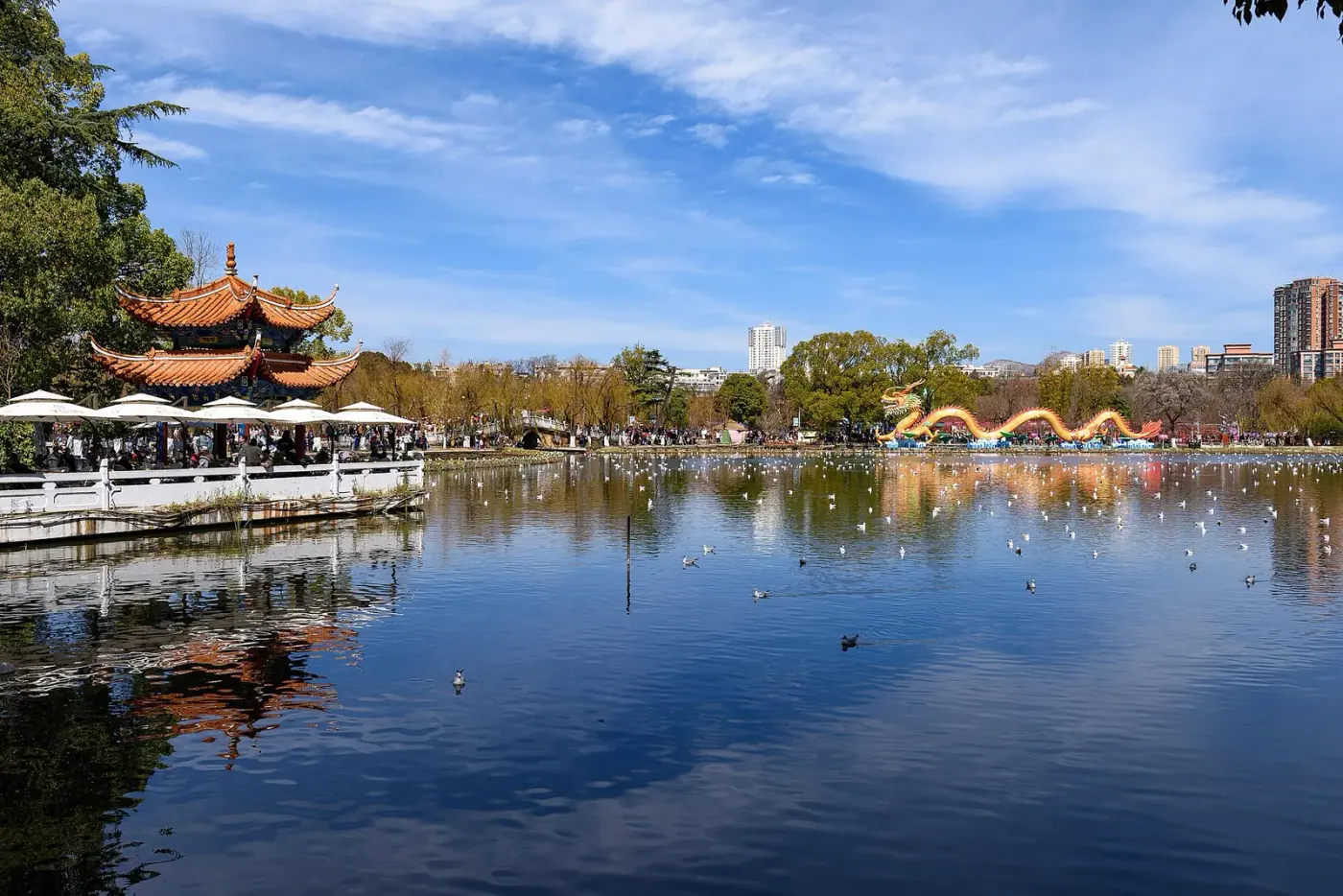
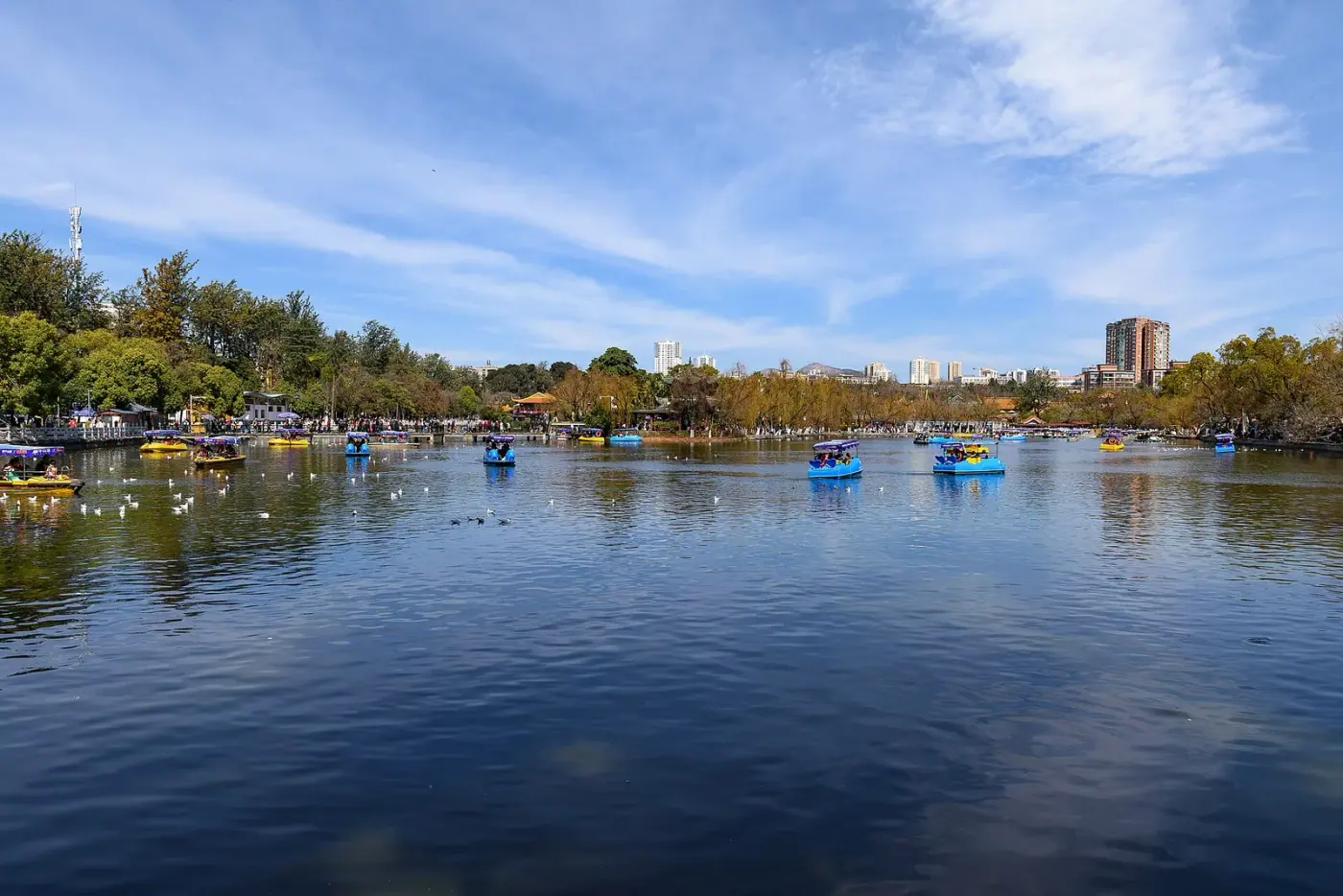
The park is built around a lake that fills with lotus in summer and reflects bare willows in winter. Stone bridges cut across the water, pavilions sit on small islands, and the paths loop in a way that lets you walk for forty minutes without repeating yourself.
The best reason to come early is not the scenery. It is the city using the park. By seven, the tai chi groups have claimed the open squares, the birdwatchers are lined up along the north bank, and someone is always practising the same song on a portable speaker. By ten, the tour groups arrive and the atmosphere changes.
How to walk it
Enter from the west gate near Wenlin Street, walk the north bank first, cross the bridge to the central islands, then loop back along the south side. That route takes about an hour at an ordinary pace and passes the tea houses without forcing you into one.
If you want tea, sit on the south side where the tables face the water. Order a pot of local green tea rather than anything ceremonial. This is a place to sit, not a tea tasting.
The gulls
From roughly November to March, black-headed gulls from Siberia take over the lake. They are loud, confident and entirely unbothered by people. Vendors sell bird food on the paths; the gulls will take it from your hand if you hold still.
This is genuinely one of the city’s best free spectacles, but it is also a photo scrum at sunset. Come at 8am if you want the birds without the selfie sticks. The exact arrival and departure dates shift with the weather, so treat any specific date you see online as a guide rather than a promise.
What it is not
Green Lake is not a quiet retreat, and it is not the place to see “traditional Kunming” in any preserved sense. The pavilions are reconstructed, the tea houses are commercial, and the park is surrounded by traffic. What it offers is a live, everyday version of the city — which is more interesting than a diorama.
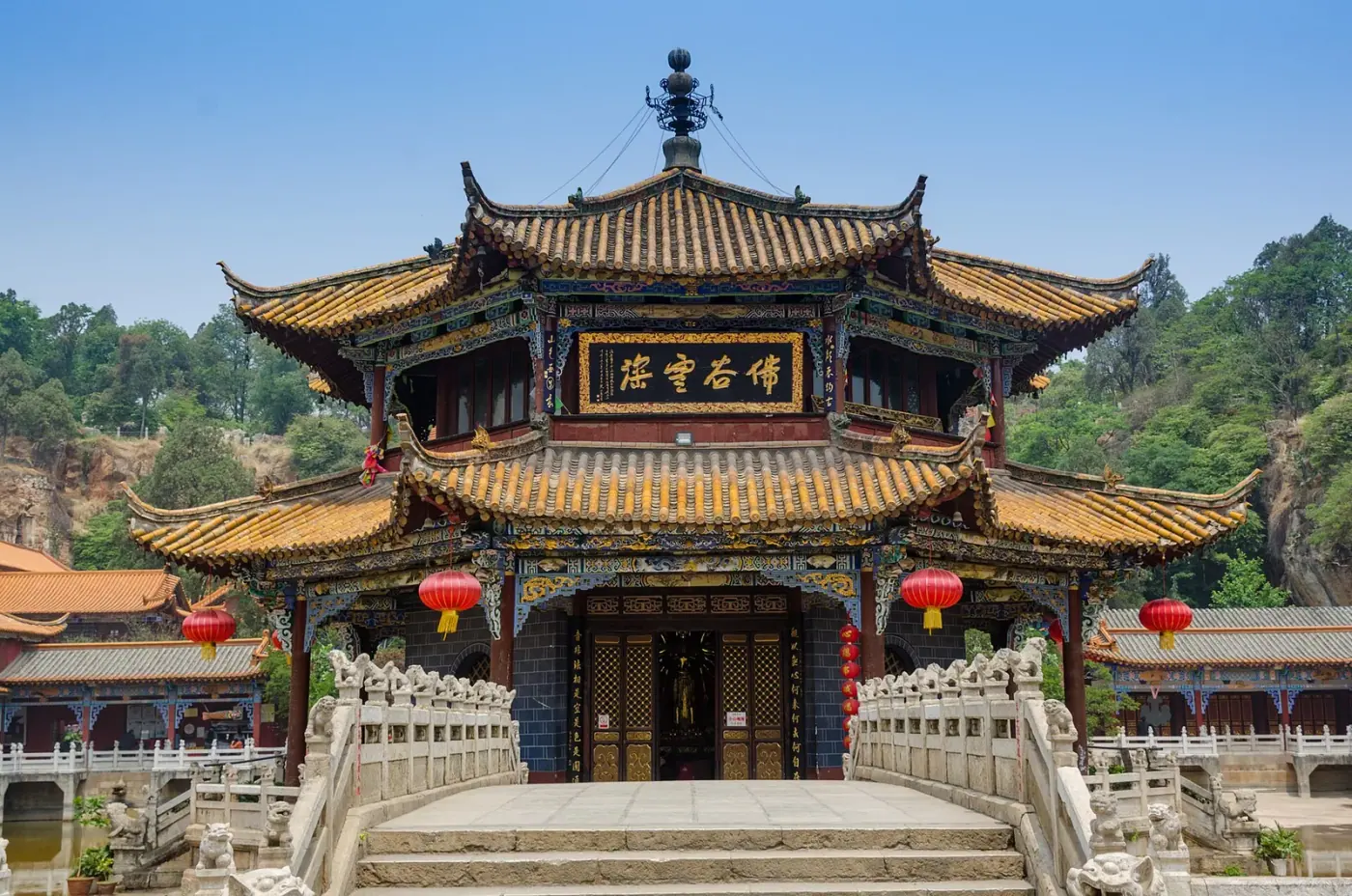
If you have only one morning in Kunming, spend it here and then walk ten minutes to Yuantong Temple. The two together give you the city’s public and religious life in a compact loop.
Practical
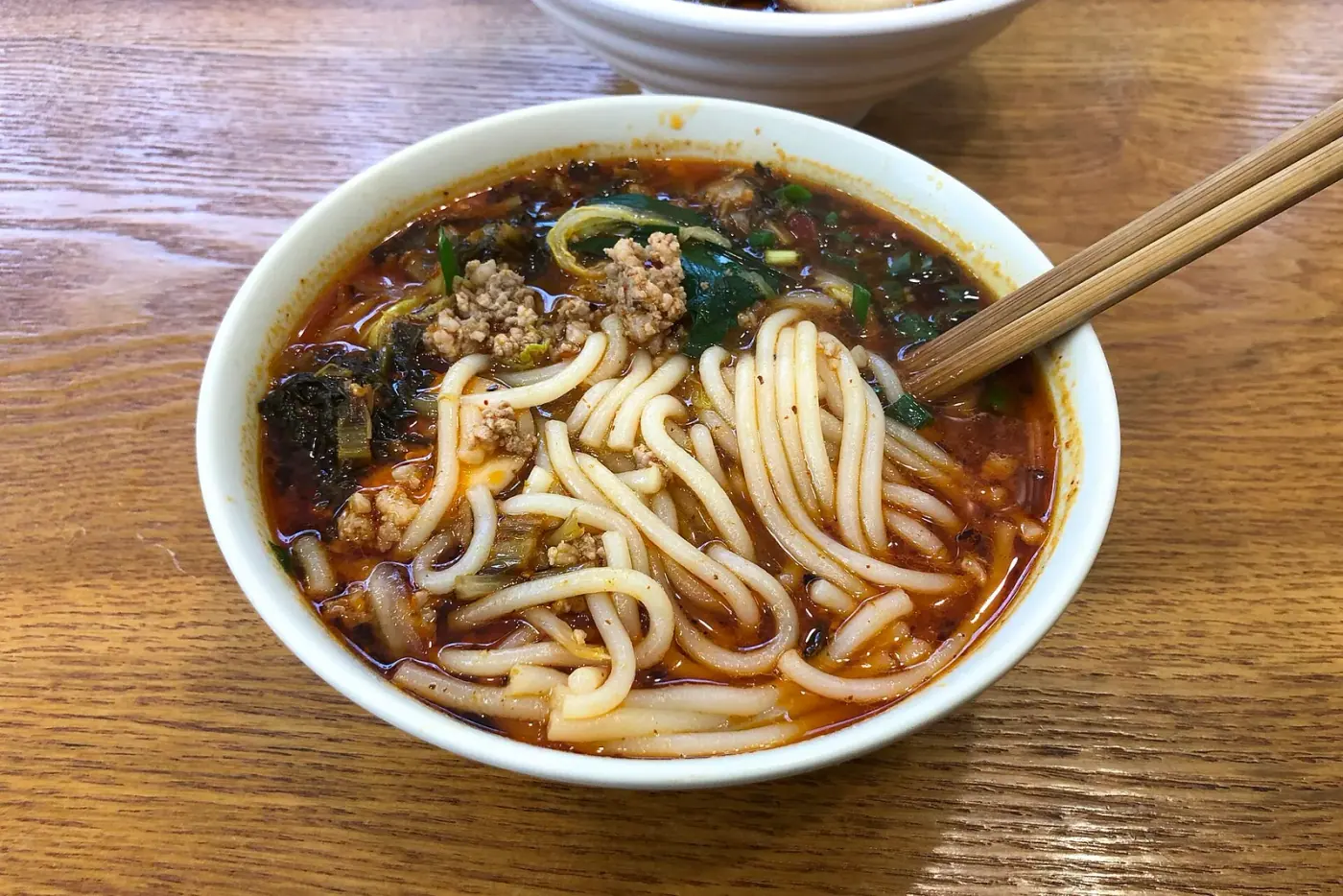
The park is free and opens early. Metro Line 4 has a Cuihu station, but the walk from the station is not obvious; follow the crowds or use a map. Toilets are basic but present. The surrounding streets have some of the best breakfast in the city, so do not eat at the hotel.