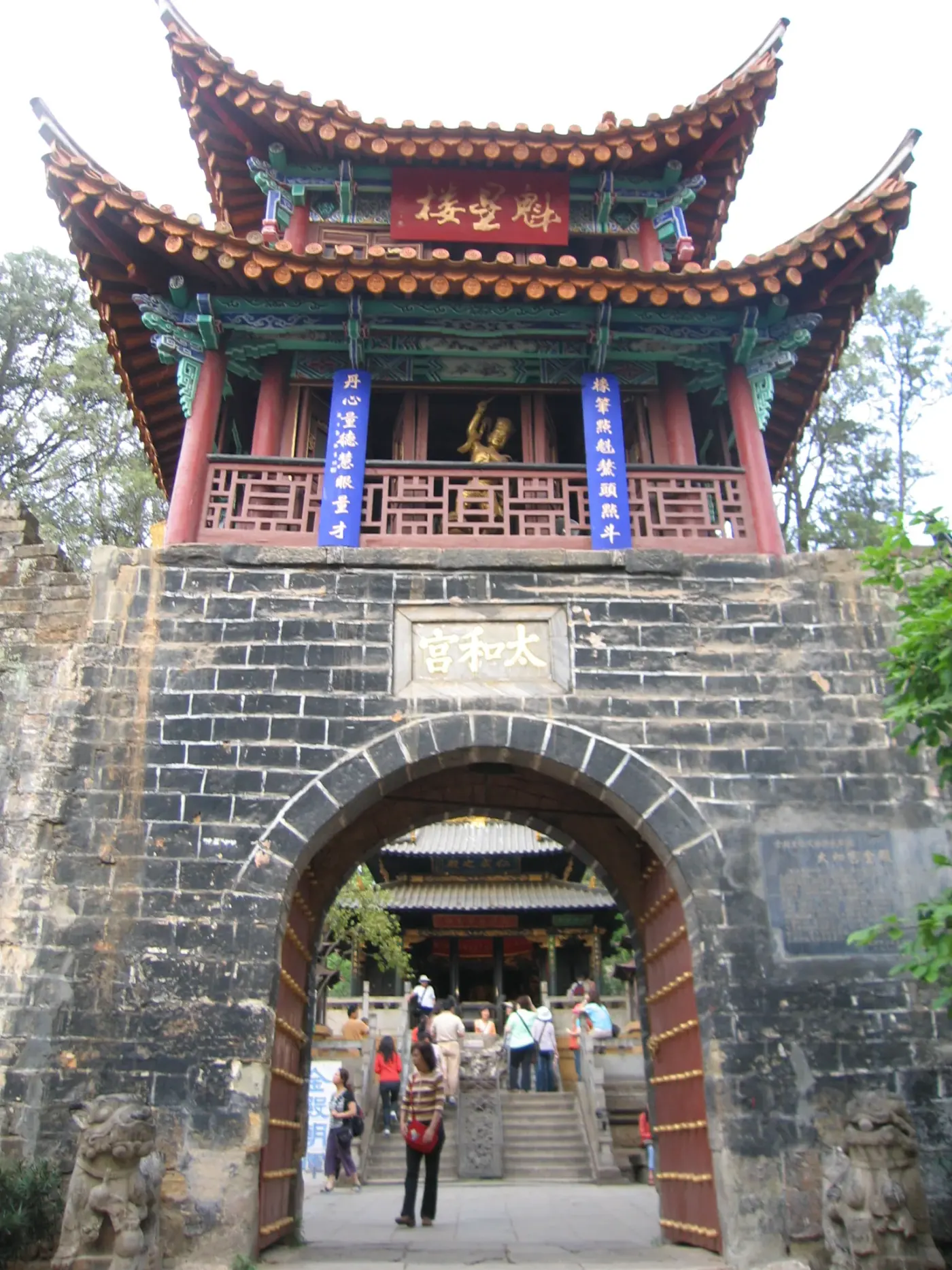
Qiongzhu Temple — often translated as Bamboo Temple — was founded in the seventh century and rebuilt several times. The buildings are pleasant but not extraordinary. The reason to come is inside the main hall: a set of 500 arhat figures, carved in the late nineteenth century, each with a different face and posture.
The arhats
Arhats are the enlightened disciples of Buddhism, and in Chinese temple art they are usually arranged in rows. Qiongzhu’s version is unusual for its realism. Some figures are laughing, some are scowling, some look bored, and a few are unmistakably drunk. They are not symmetrical or serene; they feel like a crowd of individuals.
The hall is dark and the figures are close together. Take your time, let your eyes adjust, and look at the faces rather than trying to photograph the whole room. Flash is not appropriate and usually not permitted.
The grounds
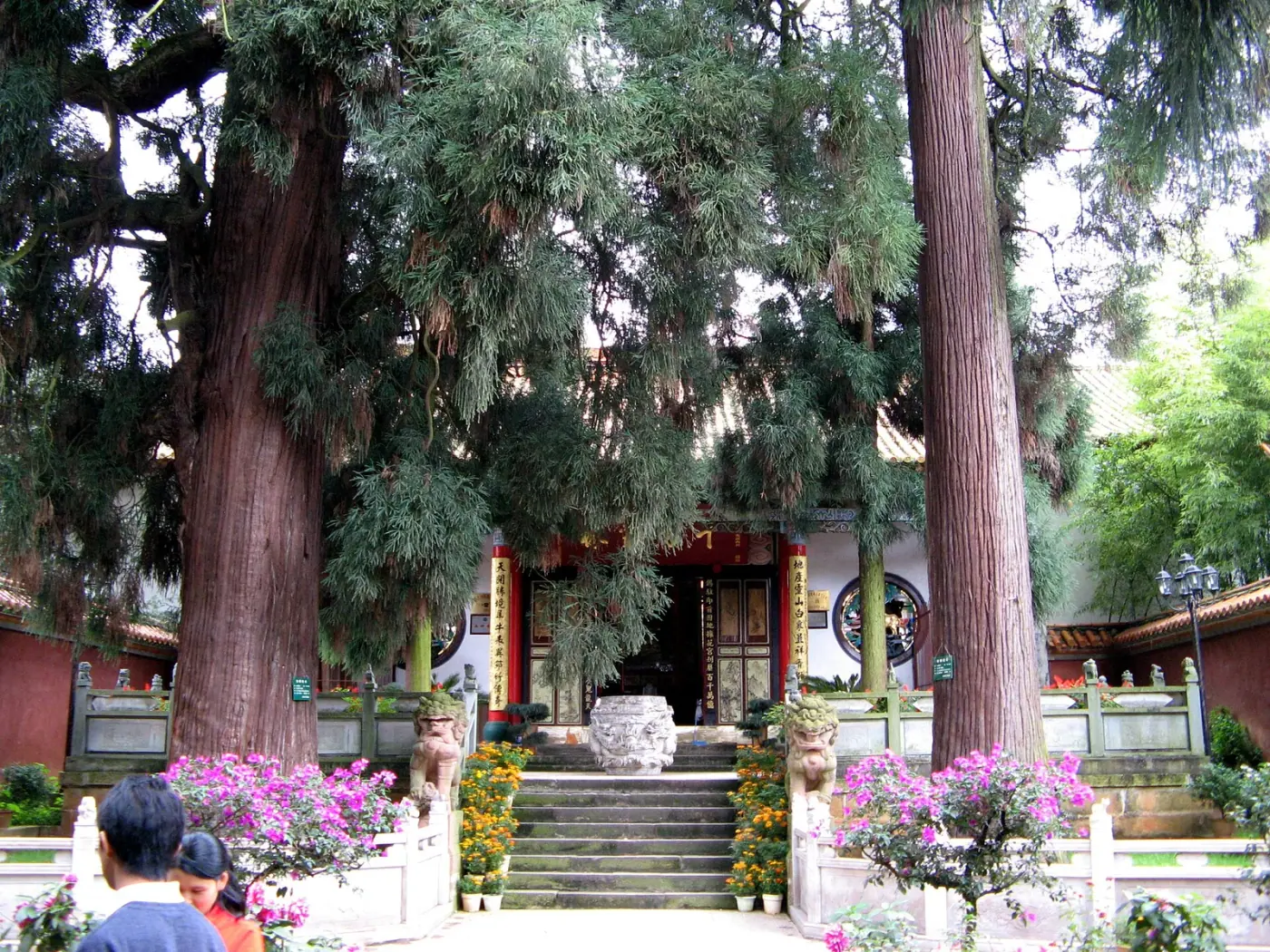
The temple is built into a hillside, with courtyards stepping up through the trees. It is cooler than the city in summer and quiet most mornings. There is a tea area where you can sit, and a vegetarian kitchen that serves simple food at lunchtime.
This is a working temple, so modest dress and quiet behaviour apply. It is also a popular local escape on weekends, which tells you something about how pleasant it is.
Getting there and combining
Qiongzhu is northwest of the city, about 20–30 minutes by taxi from Green Lake, depending on traffic. Public buses run nearby but the stop is not obvious; a taxi is the low-effort option.
Do not try to combine it with the Golden Temple in one morning unless you have a driver. They are on opposite sides of the city and the cross-town traffic is unpredictable. Choose one, do it properly, and eat lunch afterwards.