Dianchi lies on the southern edge of Kunming, a shallow plateau lake about 300 square kilometres in area. The city grew up around it, and for centuries it supplied fish, water and transport. It is also the reason the area has been settled for more than two thousand years.
The problem
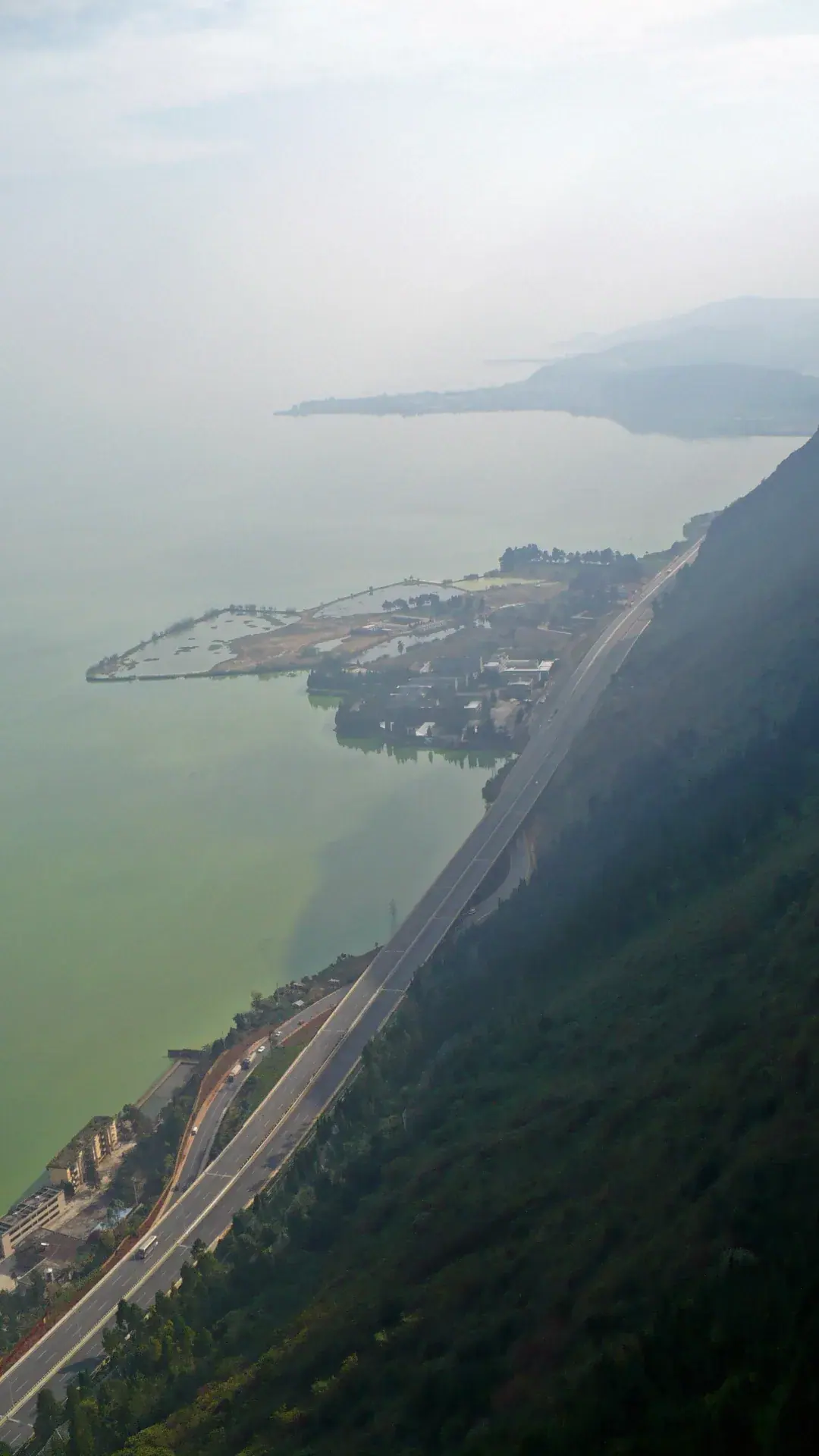
From the 1980s onward, urban sewage, industrial runoff and agricultural fertiliser flowed into the lake. Dianchi became one of the most eutrophic large lakes in China, with algal blooms, fish kills and a reputation that kept tourists away.
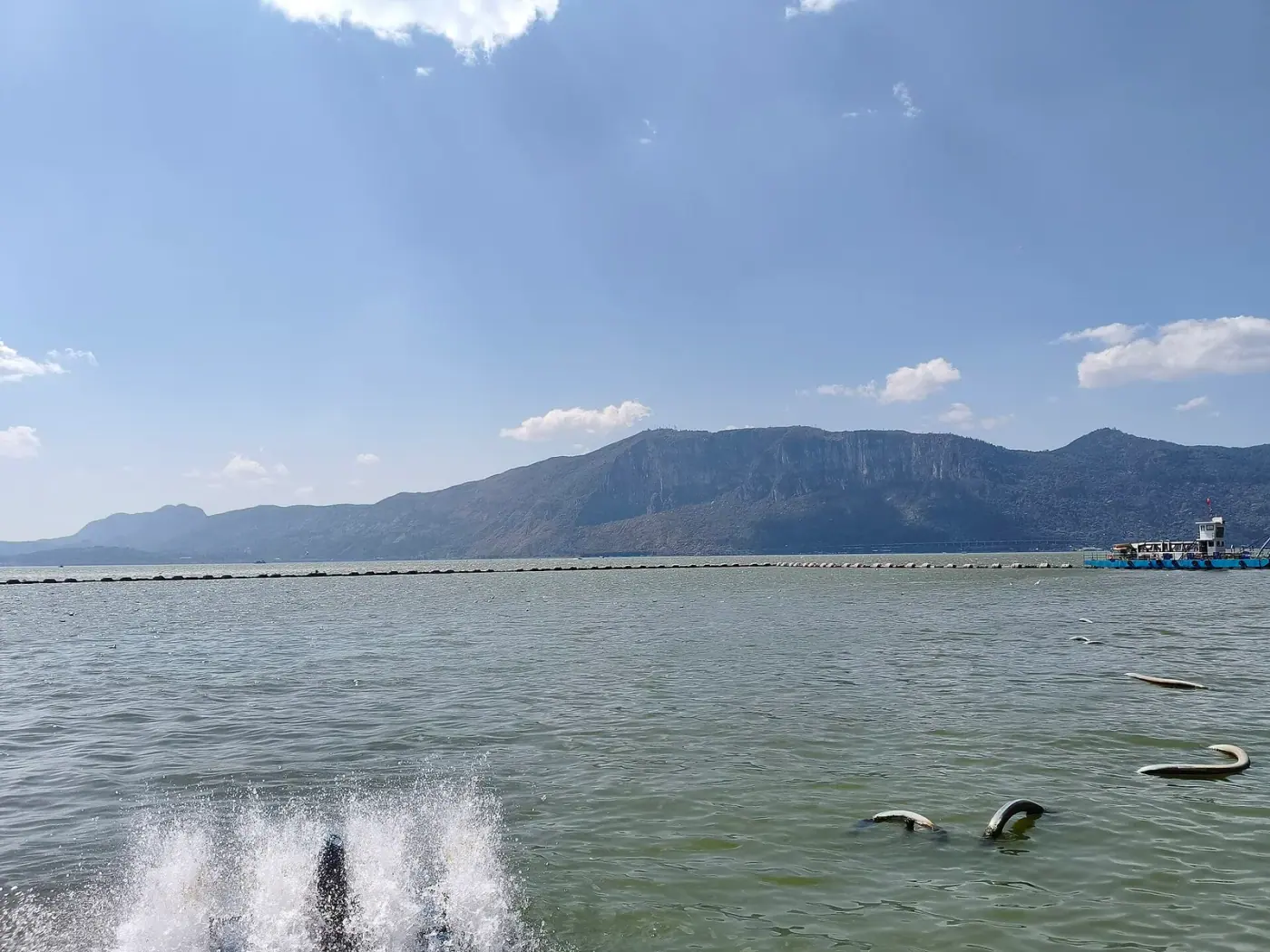
The cleanup has cost billions of yuan. Sewage treatment plants, wetland restoration and restrictions on development have improved parts of the lake, but the ecology remains fragile. The water is not safe for swimming in most areas.
Where to see it at its best
The Western Hills give the classic view: the lake spread out below, the city on the far shore, the light changing through the afternoon.
Haigeng Dam and the lakeside parks on the south bank are the most accessible shoreline, popular with cyclists and families. The wetlands there are part of the restoration effort and attract birds.
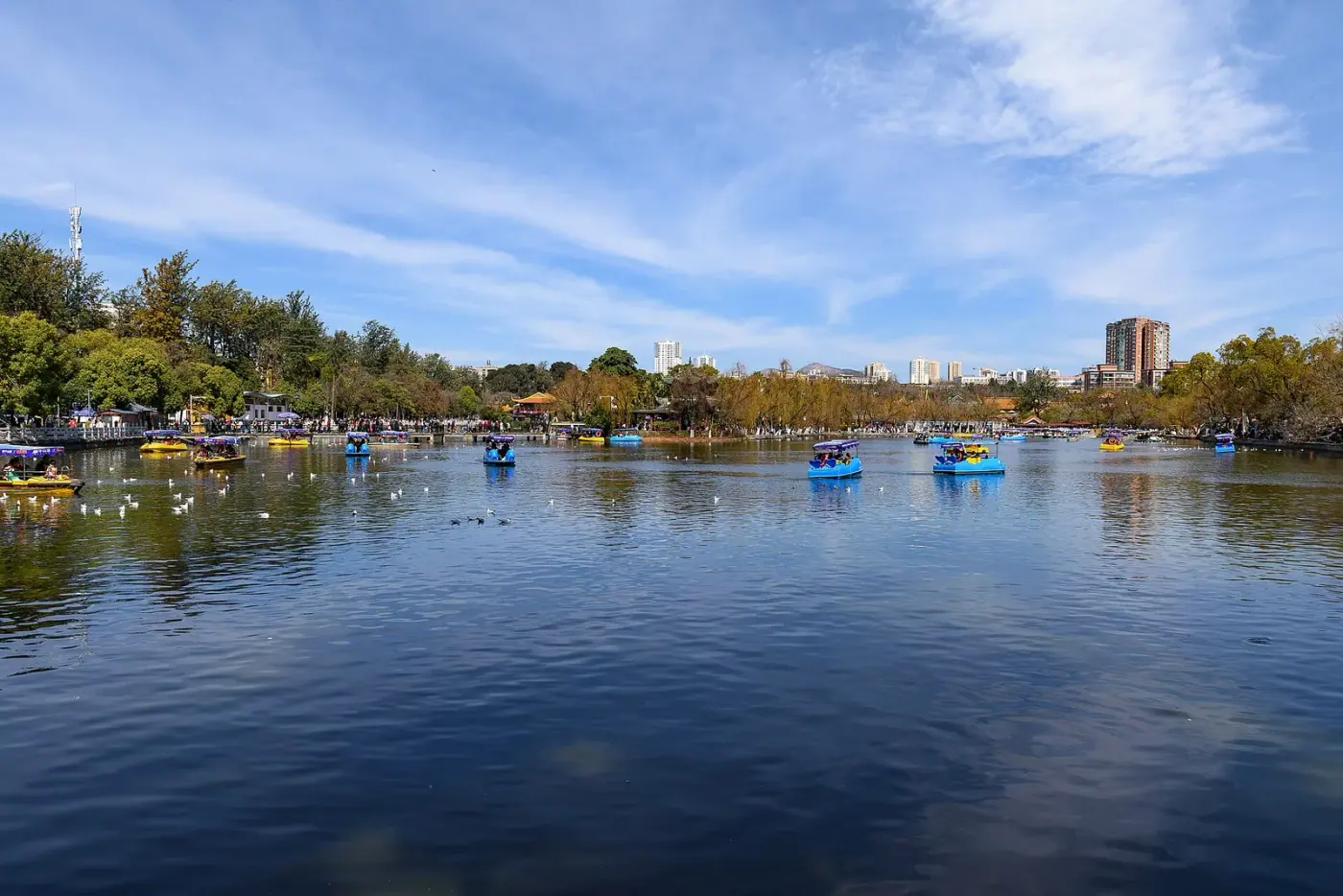
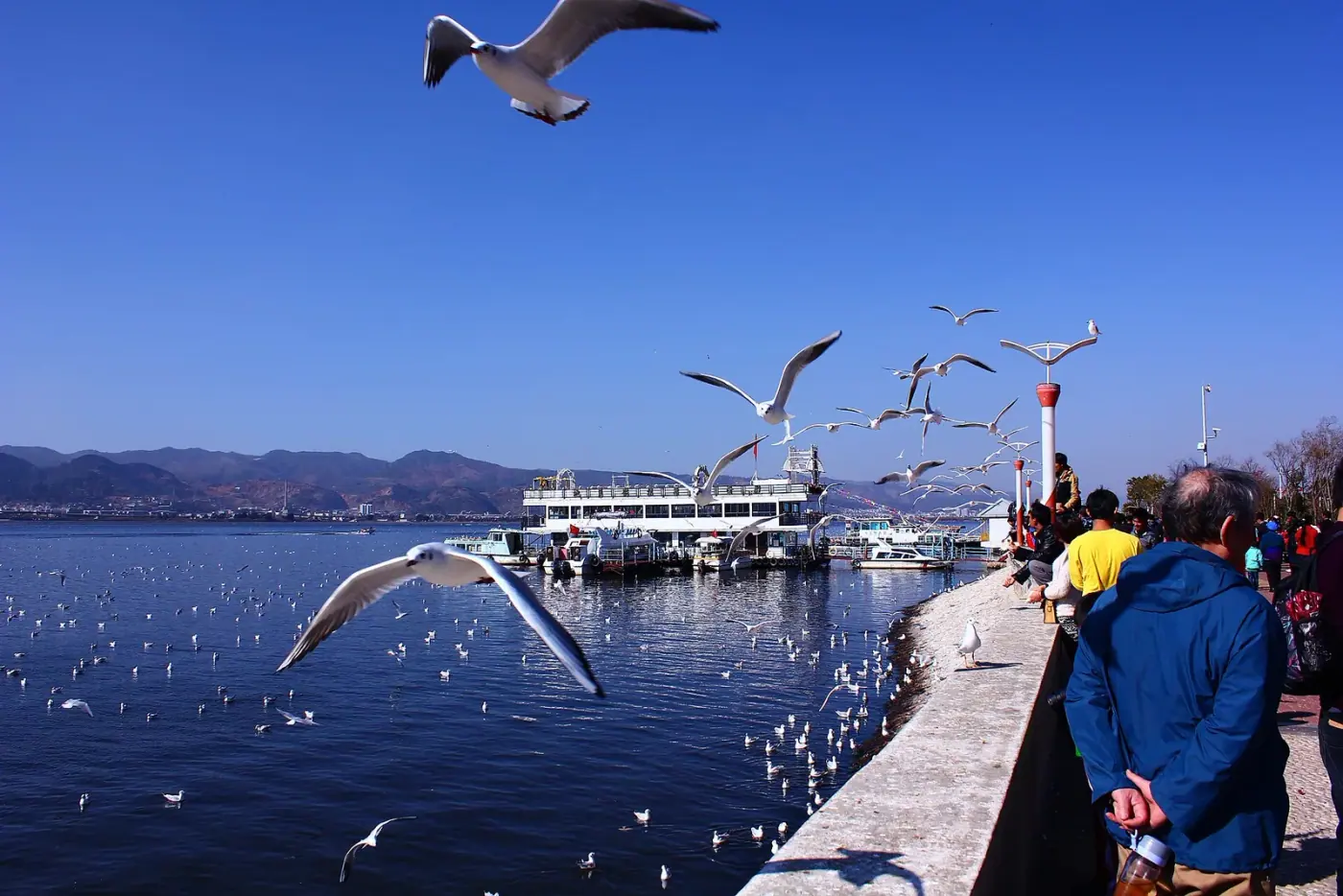
In winter, black-headed gulls from Siberia winter on the lake and on Green Lake, and feeding them is a local ritual.
What to expect
Do not come expecting a pristine alpine lake. Come for the scale, the light and the birdlife, and for the view from the hills. The lake is a working landscape with a long history, not a postcard.
The ecological argument
Dianchi is a case study in the tension between urban growth and water. The lake’s fate depends on whether Kunming can manage its sewage and development. That story is visible from the shoreline, and it is worth understanding.