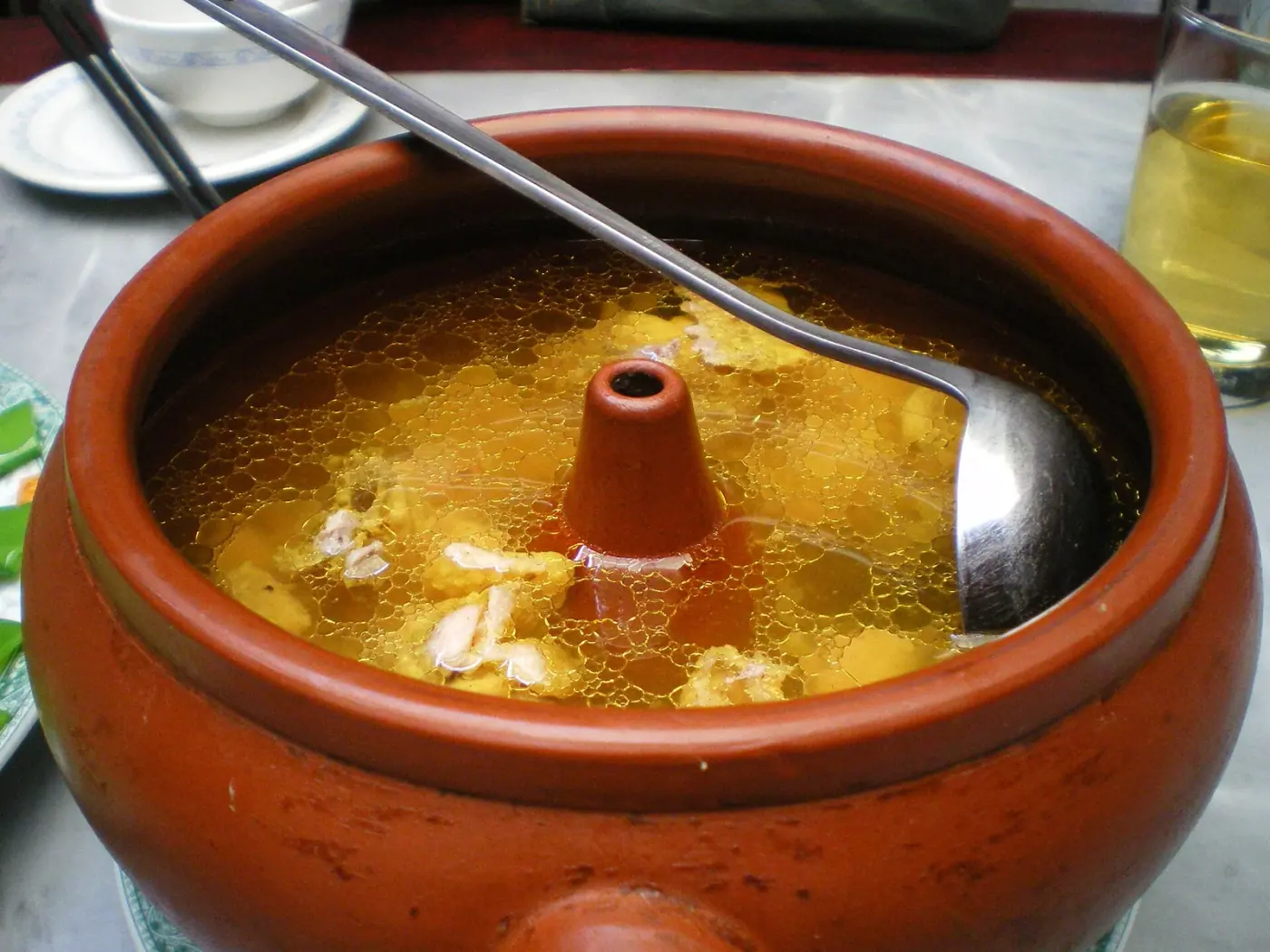
Steam-pot chicken is cooked in a Jianshui ceramic pot with a central chimney. Steam rises through the chimney, condenses on the lid and drips down into the pot, slowly filling it with broth — no water is added. The chicken is usually free-range and cut into pieces, sometimes with ginger, goji berries, bamboo shoots or medicinal herbs.
What to look for
The broth should be clear, golden and intensely savoury. If it is cloudy or tastes like stock cubes, the kitchen has cheated. The meat should be soft but not falling apart. A good version has a layer of fat on top that you can skim off if you prefer.
The pot is usually shared. Ask for a small one if you are two people; a large pot feeds four. It arrives hot and continues to cook slightly at the table.
Where to eat it
Yunnan restaurants rather than noodle shops. The Old Street and Green Lake areas have several mid-range places that do a reliable version. Hotel restaurants often serve it, but at a premium. Look for a menu that lists the pot by size and mentions the chicken’s origin.
Steam-pot chicken is often part of a larger Yunnan meal with wild vegetables, cured ham and rice. Order one pot and two vegetable dishes for two people.
The herb question
Some versions include traditional medicinal herbs — goji, angelica, codonopsis. They add a slight bitterness and a lot of local credibility. If you are pregnant or taking medication, ask what is in the pot before ordering.
Practical
The dish takes time to cook, so order it when you sit down rather than later. It is mild and child-friendly. The bones are in the meat; warn anyone who is not used to Chinese chicken cuts. Prices vary widely; a small pot in a neighbourhood restaurant is much better value than a large one in a tourist area.