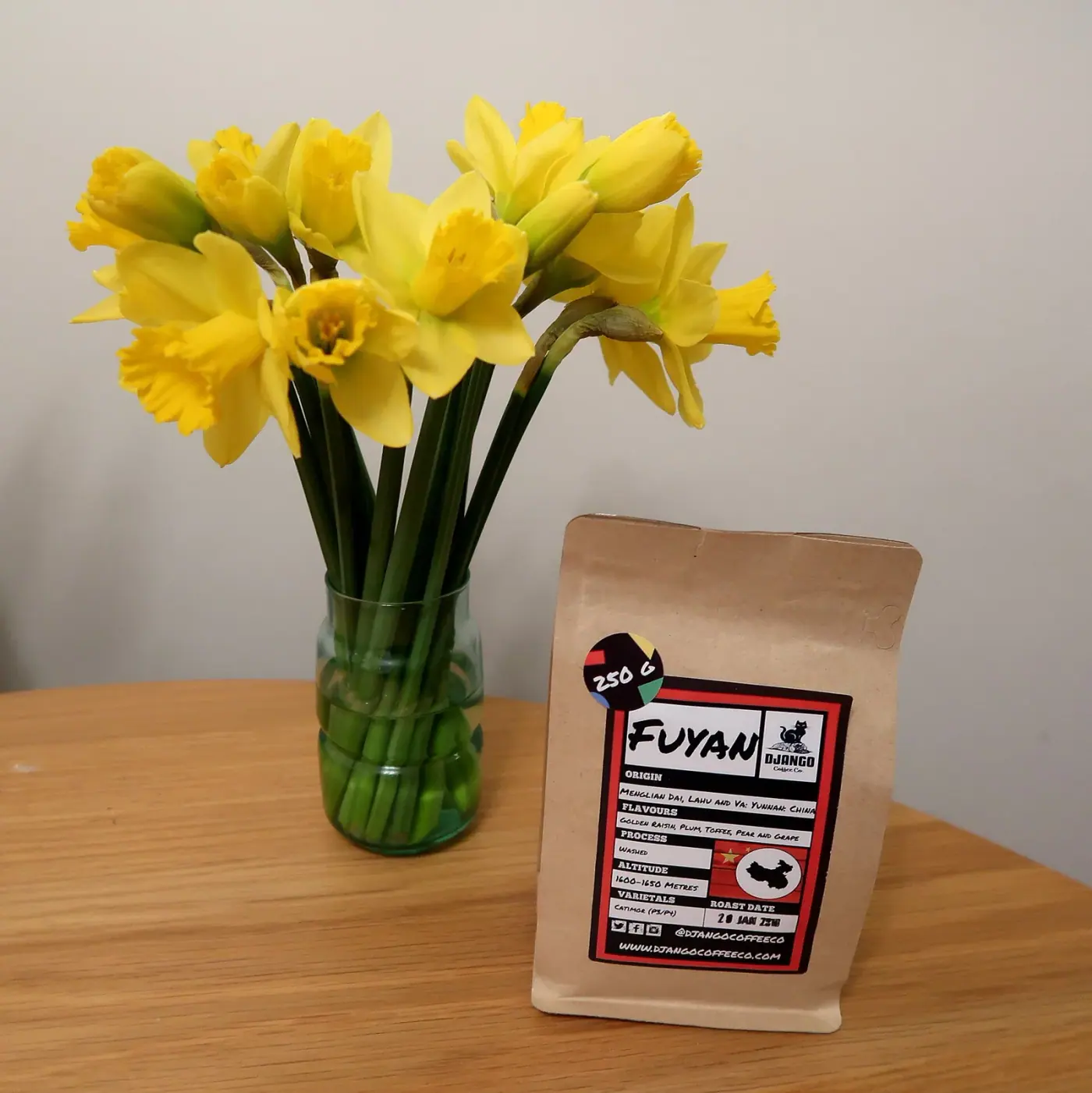
Yunnan produces the overwhelming majority of China’s coffee. The crop grows in the warmer south and west of the province — around Pu’er, Baoshan and Dehong — and most of it has historically been exported as a commodity bean. That is changing. A new generation of roasters and café owners is treating Yunnan coffee as a provenance product, the way the wine industry treats a region.
The beans
Yunnan arabica is typically grown at 1,000–1,700 metres, which gives it good acidity and a clean, tea-like body. The best lots are washed and sun-dried, with notes of citrus, brown sugar and sometimes a floral edge. It is not a heavy, chocolatey coffee; it is closer to a Central American profile.
The cafés
Kunming’s café scene is concentrated around Wenlin Street, Green Lake and the university district. The best places roast their own beans, list the farm and the processing method, and serve pour-over alongside espresso. Prices are ¥25–40 a cup, which is high for China but reasonable for specialty coffee.
The culture
Coffee arrived in Yunnan in the late nineteenth century, brought by French missionaries, but it remained a minor crop for most of the twentieth. The boom came in the 1980s and 1990s, when international buyers encouraged large-scale planting. Today, the specialty scene is small but growing, and the conversation is about how to make Yunnan coffee taste like somewhere, not just like coffee.
A good crawl
Start on Wenlin Street, where several roasters sit within a few minutes of each other. Walk to Green Lake, where the cafés have terraces and lake views. Finish at a small shop in the old street lanes.
What to order
Ask for a single-origin Yunnan pour-over. If the café roasts its own, ask which farm and which processing method. This is the conversation the scene wants to have.